
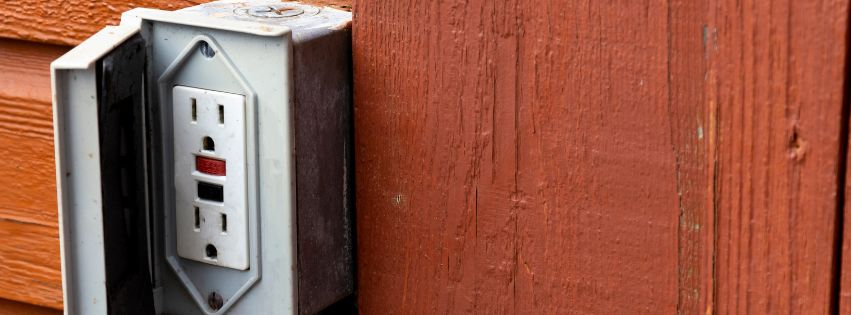
The patio lights work all summer. Then Seattle’s first heavy rain arrives, and the outdoor outlets lose power. You press the reset button, but the GFCI trips again.
That repeated trip is frustrating, especially when the circuit powers holiday lights, landscape equipment, or a garage refrigerator. However, bypassing the GFCI can expose someone to a serious shock hazard.
When an outdoor GFCI keeps tripping when it rains, moisture is often creating an unintended path for electrical current. The GFCI is responding to that leakage. Finding the source may involve the receptacle, its cover, plugged-in equipment, or wiring farther downstream.
Why an Outdoor GFCI Keeps Tripping When It Rains
A ground-fault circuit interrupter compares the current leaving on the ungrounded conductor with the current returning on the neutral. Under normal conditions, those values should remain nearly equal.
When electricity leaks through water, damaged insulation, equipment, or another unintended path, the values no longer match. The GFCI shuts off power quickly to reduce the risk of electric shock.
Because of this, a rain-related trip should be treated as a real warning until testing proves otherwise. Replacing the GFCI with a standard receptacle only removes the protection. It does not correct the fault.
Water May Be Entering the Receptacle Box
Outdoor receptacles need equipment designed for wet and damp locations. The receptacle, enclosure, gasket, cover, fittings, and cable entries must work together.
A cracked cover can let wind-driven rain reach the receptacle. Missing gaskets and loose fittings create additional entry points. Water may also run down siding or follow a cable into the box.
Seattle rain rarely falls straight down. Wind can push moisture behind a cover that appears adequate during calm weather. As a result, installation orientation and enclosure condition matter.
The receptacle should also be weather-resistant when required. Look for a WR marking on its face. Weather-resistant construction helps the device withstand moisture, cold, and ultraviolet exposure.
The Cover May Not Protect a Connected Cord
A basic flip cover may protect an unused receptacle when it is fully closed. However, it may provide little protection when a cord is plugged in.
An extra-duty “while-in-use” cover encloses the plug and receptacle during use. The cord exits through a protected opening while the cover remains closed.
This setup is important for holiday lighting, pond equipment, and other loads that stay connected during wet weather. The Consumer Product Safety Commission recommends weatherproof-while-in-use protection when outdoor receptacles operate in wet conditions.
That said, even a good cover cannot compensate for a damaged cord or plug. Every connected item still needs an outdoor-use rating and intact insulation.
A Plugged-In Device May Be the Source
The outlet itself is not always defective. Outdoor equipment can develop current leakage when rain reaches a damaged plug, cord, transformer, motor, or connection.
Common sources include:
- Holiday lights and decorations
- Landscape-lighting transformers
- Pressure washers and power tools
- Pond pumps and fountains
- Extension-cord connections resting on the ground
- Garage refrigerators or freezers
- Heat tape and deicing equipment
- Damaged irrigation controls
- Outdoor kitchens and appliances
- Chargers and power supplies not rated for outdoor use
One GFCI receptacle may protect several downstream outlets. Therefore, the wet equipment may be on the side of the house even when the tripped device is in the garage.
Electrician’s Note: “Nothing is plugged into this outlet” does not eliminate the circuit as the problem. A GFCI can protect multiple receptacles, lights, or devices connected to its load terminals.
Underground or Exterior Wiring Can Deteriorate
Moisture can reach more than the receptacle. Damaged underground cable, failed conduit fittings, poorly sealed junction boxes, and deteriorated insulation can also create leakage.
Conduit installed outdoors is considered a wet environment inside. Condensation and water entry can occur even when the raceway looks sealed from the outside. Conductors and connections must be suitable for those conditions.
Landscaping work creates another common problem. Shovels, edging tools, stakes, and rodents can damage shallow or exposed wiring. The fault may only become obvious after rain saturates the soil.
Because these problems are concealed, they require electrical testing. Replacing the visible GFCI repeatedly will not correct a damaged cable.
What You Can Check Safely
Do not remove receptacles, open boxes, or handle wet electrical equipment. However, homeowners can complete a limited isolation check without exposing wiring.
First, unplug every device connected to the affected outdoor and garage outlets. Include extension cords, transformers, decorations, and equipment that appears switched off.
Next, inspect the cords and plugs visually. Do not reuse equipment with cracked insulation, bent blades, corrosion, melted plastic, or missing grounding pins.
Once the receptacle and surrounding area are dry, press the reset button. If it holds, reconnect one device at a time. A trip after connecting one item points toward that equipment or its cord.
Stop if the GFCI will not reset with everything unplugged. The problem may involve the receptacle, downstream wiring, or permanently connected equipment.
Never use a hair dryer, heat gun, or open flame to dry an electrical box. Do not touch a wet plug while it remains energized.
The Smart Electric Seattle Process
At Smart Electric Seattle, we start by asking when the circuit trips. Timing provides useful clues. A trip during active rain suggests a different problem than one occurring whenever a pump starts.
Next, we map the GFCI’s protected circuit. We identify downstream receptacles and permanently connected loads that may not be obvious to the homeowner.
Our inspection can include:
- Testing GFCI operation and trip performance
- Checking line and load connections
- Verifying polarity and grounding
- Inspecting weather-resistant receptacles
- Examining gaskets and while-in-use covers
- Looking for corrosion and water paths
- Checking outdoor junction boxes and fittings
- Inspecting extension cords and connected equipment
- Testing downstream wiring for leakage or insulation damage
- Confirming breaker and conductor compatibility
When appropriate, we isolate sections of the circuit. This approach helps distinguish a failed receptacle from wet equipment or damaged wiring.
If the enclosure allows water entry, we correct the mounting, gasket, fittings, or cover. We may also replace corroded devices and damaged boxes with listed equipment suitable for the location.
Then we restore power and test the entire protected circuit. Finally, we explain which outlets are downstream of the GFCI and how to test the device.
Our electrical outlet services include outdoor receptacle repair, GFCI replacement, and weatherproof installations.
The DIY & Handyman Filter
A tripping GFCI should not be bypassed. It is specifically designed to protect people where electricity may contact water.
Unsafe shortcuts include:
- Replacing the GFCI with a standard receptacle
- Holding or taping the reset button in place
- Installing a larger circuit breaker
- Running an extension cord from an indoor room
- Covering the box with plastic or tape
- Caulking openings without understanding drainage
- Leaving cord connections on wet soil
- Using indoor power strips outside
- Reversing the GFCI line and load conductors
- Ignoring corrosion inside the box
Installing a larger breaker is especially dangerous. The breaker protects the circuit conductors from excessive current. It does not solve ground-fault leakage or water entry.
A handyman may replace the receptacle without testing the protected wiring. The new device may trip during the next storm because the actual fault remains.
Permitting depends on the work performed and local jurisdiction. Broader circuit alterations generally require a permit and inspection. Washington L&I also advises homeowners to use GFCI protection and weatherproof covers for outdoor receptacles.
Warning Signs You Shouldn’t Ignore
- The GFCI trips every time it rains
- Water is visible inside the cover
- The receptacle contains green or white corrosion
- The cover, gasket, or enclosure is cracked
- A plug or receptacle feels warm
- The GFCI will not reset with everything unplugged
- Several outdoor or garage outlets lose power together
- A landscape-lighting transformer trips the circuit
- An extension-cord connection rests on wet ground
- Lights flicker before the GFCI trips
- The receptacle buzzes or crackles
- Plastic around the outlet appears melted or scorched
Key takeaway: A rain-related GFCI trip is usually evidence of moisture or current leakage. Resetting it repeatedly does not repair the underlying electrical fault.
When to Call a Seattle Electrician
Schedule Service Soon
Schedule service when the GFCI trips during more than one rain event. An electrician can locate the protected outlets and test the circuit before corrosion or insulation damage worsens.
You should also call when the receptacle lacks a weather-resistant marking or while-in-use cover. Updating the device and enclosure can improve reliability while preserving required shock protection.
If one appliance causes the trip, stop using that appliance outdoors. Have it repaired or replaced according to the manufacturer’s guidance.
Call for Immediate Service
Turn off the circuit if it is safe to do so and call promptly when you see water inside an energized box. Do not touch the receptacle, plug, or connected equipment.
Burning odors, smoke, arcing, buzzing, melting, or a hot receptacle require immediate evaluation. These signs may indicate a loose or damaged connection in addition to the ground fault.
If an electrical product falls into standing water, do not retrieve it until power is disconnected. Call 911 if anyone receives a shock, or if you see smoke or fire.
Frequently Asked Questions
Why does my outdoor GFCI keep tripping when it rains?
Rain may be entering a receptacle, cover, junction box, cord connection, appliance, or damaged section of wiring. The moisture creates a leakage path that the GFCI detects. Unplug connected equipment, keep clear of wet components, and call an electrician if tripping continues.
Can moisture make a GFCI trip even without anything plugged in?
Yes. The GFCI may protect downstream outlets or permanently connected equipment. Water can also enter the receptacle box or reach damaged exterior wiring. If the device trips with all known loads disconnected, the protected circuit needs professional testing.
Should I replace a frequently tripping GFCI?
The GFCI may be worn or damaged, but replacement should follow circuit testing. A new device will still trip if water, faulty equipment, or damaged wiring remains. Never replace an outdoor GFCI with a standard receptacle to stop repeated interruptions.
Keep Outdoor Power Safe Through Seattle’s Wet Season
An outdoor GFCI that trips during rain is doing an important job. It is disconnecting power after detecting current outside its intended path.
The repair may be as simple as replacing a damaged cover or connected cord. However, concealed moisture, corrosion, and exterior wiring damage can require deeper troubleshooting.
Smart Electric Seattle diagnoses outdoor GFCI problems throughout Seattle, Bellevue, Kirkland, and the Eastside. Contact Smart Electric Seattle for safe, code-compliant help with a tripping outlet, damaged enclosure, or wet exterior circuit.