
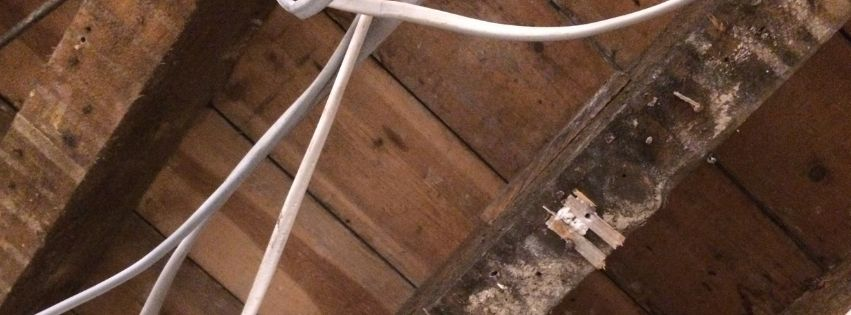
Planning a whole-home rewire can feel overwhelming. You may already have flickering lights, ungrounded outlets, old wiring, or breakers that trip too often.
Then comes the big question: What does house rewiring cost in Seattle?
Published Seattle estimates vary widely. That happens because a small bungalow with open access is very different from a finished three-story home. The type of wiring, number of circuits, wall access, panel condition, and permit needs all affect the price.
Delaying unsafe wiring can increase the risk of shocks, overheated connections, and electrical fires. However, homeowners should not assume every older house needs a complete rewire.
A professional Seattle home rewiring evaluation should identify which wiring needs replacement. It should also explain whether a partial or complete rewire makes sense.
What Does House Rewiring Cost in Seattle?
For initial budgeting, published 2026 Seattle-area guides place many whole-home rewiring projects between approximately $9,500 and $45,000 or more.
Some straightforward homes may fall below that range. Large homes, difficult access, extensive wall repair, or a required panel upgrade can push the cost higher.
These are general planning figures, not a Smart Electric Seattle quote. An onsite inspection is necessary before an electrician can provide an accurate price.
Seattle House Rewiring Cost Factors
| What affects the project | How it can change the price |
|---|---|
| Home size | Larger homes usually need more wiring, outlets, switches, and labor |
| Number of floors | Upper floors and finished basements can make wiring harder to reach |
| Wall and ceiling access | Open framing costs less to work in than finished plaster or drywall |
| Existing wiring | Knob-and-tube, aluminum wiring, and unsafe past repairs may require different solutions |
| Number of circuits | More rooms, appliances, and dedicated circuits increase the scope |
| Electrical panel | An old, damaged, or undersized panel may need repair or replacement |
| Outlet and switch locations | Adding or moving devices requires more wiring and wall access |
| Permit and inspection | Required permits and inspections must be included in the project |
| Wall repair and painting | Some electricians exclude finish repairs from their estimates |
| Occupied home | Working around furniture and residents can increase project time |
The lowest estimate is not always the least expensive choice. Compare what each contractor includes before comparing the final price.
Why House Rewiring Cost Varies in Seattle
Older Seattle homes can be harder to access
Many homes in Capitol Hill, Queen Anne, Ballard, and West Seattle were built long before modern electrical use. They may contain plaster walls, narrow framing spaces, finished basements, or several generations of electrical work.
Older construction does not automatically make a home unsafe. However, limited access can make new wiring more difficult to install.
An experienced electrician looks for practical wiring routes before opening walls. Careful planning can reduce unnecessary damage and keep the project organized.
A partial rewire may be enough
Not every home needs all its wiring replaced. Some properties have older wiring in one section and modern wiring elsewhere.
For example, a remodeled kitchen may already have grounded circuits and GFCI protection. Bedrooms or upstairs lighting may still use older wiring.
In that case, a partial rewire may address the unsafe or outdated sections. This can lower the cost while still solving the core problem.
A home electrical inspection helps separate active safety concerns from optional improvements.
Knob-and-tube wiring changes the project
Knob-and-tube wiring is common in some older Seattle homes. It uses separate conductors supported by ceramic knobs and tubes.
The system was designed for the electrical needs of another era. It may lack grounding and may have been altered incorrectly over many decades.
Insulation can also create concerns when it surrounds wiring that was designed to release heat into open air. Hidden splices and connections to newer wiring may add more risk.
An electrician needs to trace the active circuits before deciding what must be replaced. Simply disconnecting one visible section does not prove that all old wiring is inactive.
Electrician’s Note: In older Seattle homes, we often find a mix of wiring types. One room may have modern grounded wiring while the next still relies on older circuits. We map the system before recommending a complete rewire.
Aluminum wiring needs a professional evaluation
Some homes contain aluminum branch wiring installed during the 1960s and 1970s. Aluminum expands and contracts differently than copper.
When connections are loose or use incompatible devices, resistance can develop. Resistance creates heat at outlets, switches, and junctions.
Some aluminum wiring problems can be addressed with approved repair methods. Other homes may benefit from partial or complete replacement.
The right solution depends on the wiring condition, connection methods, and project goals.
The electrical panel may affect the cost
A rewire adds modern circuits and protective breakers. The existing panel must have enough space and capacity for that work.
A full rewire does not automatically require a larger electrical service. We use a load calculation to determine how much power the home needs.
If the panel is damaged, full, or incompatible with the required breakers, it may need replacement. Our guide to electrical panel replacement cost in Seattle explains why panel and service work can vary.
Why Rewiring Matters for Seattle Area Homes
A modern home asks much more from its wiring than a home built in 1920 or 1950.
Seattle homeowners now use heat pumps, computers, entertainment systems, induction ranges, EV chargers, and smart-home equipment. These loads may share circuits that were never designed for them.
An overloaded circuit carries more current than its wiring can safely handle. That excess current creates heat inside walls and at electrical connections.
The correct solution is not installing a larger breaker. The breaker must match the wiring it protects. Upsizing it without replacing the circuit can allow the wiring to overheat.
Modern rewiring can also provide:
- Grounded three-prong outlets
- More convenient outlet locations
- Dedicated circuits for large appliances
- AFCI protection against dangerous arcing
- GFCI protection in areas exposed to moisture
- Better support for heat pumps and home offices
- Capacity for future electrical upgrades
- Clearer circuit labels
- Removal of unsafe hidden repairs
What Should a Rewiring Estimate Include?
A useful estimate should clearly define the work. “Rewire house” is too vague for a major project.
Ask whether the price includes:
- The rooms and circuits being rewired
- New outlets, switches, and ceiling boxes
- Dedicated appliance circuits
- AFCI and GFCI protection
- Electrical panel work
- Permit and inspection fees
- Temporary power arrangements
- Removal or disconnection of old wiring
- Circuit labeling
- Cleanup
- Wall and ceiling repairs
- Painting
- Warranty coverage
Some electricians perform the electrical work but do not repair drywall or plaster. That can be perfectly reasonable, but it must be clear before the project begins.
Also ask how the contractor handles hidden problems. Older homes can contain unsafe splices, damaged wiring, or past work that was never permitted.
Planning a Seattle rewire? Contact Smart Electric Seattle for an onsite evaluation and a clearly defined project scope.
The Smart Electric Seattle Process
We begin by understanding why the homeowner is considering rewiring. Safety concerns, remodeling plans, insurance questions, and modern power needs can lead to different recommendations.
1. We inspect the existing system
We examine the accessible wiring, outlets, switches, electrical panel, grounding, and visible connections.
We also ask about recurring symptoms. These may include flickering lights, warm outlets, tripping breakers, shocks, or burning odors.
2. We identify the wiring types
Many Seattle homes contain more than one kind of wiring. We determine which circuits have modern grounded wiring and which still use older materials.
This helps prevent unnecessary replacement of wiring that remains safe and suitable.
3. We discuss the homeowner’s plans
A basic safety rewire differs from a larger modernization project. We ask about planned heat pumps, EV chargers, kitchen appliances, home offices, additions, and smart-home features.
Those plans affect circuit placement and the electrical load calculation.
4. We explain partial and complete rewiring options
When a partial rewire can solve the problem, we explain that option. When unsafe wiring is widespread, a complete rewire may offer better long-term value.
The homeowner receives a clear explanation of the recommended scope and why it matters.
5. We plan access carefully
We identify practical paths through basements, attics, crawl spaces, closets, and existing openings.
Some wall access may still be necessary. However, careful planning helps limit avoidable damage.
6. We handle permits and inspection
Seattle electrical work generally requires a permit and inspection. We account for those requirements in the project plan.
The completed work must meet the adopted electrical code and the equipment manufacturer’s instructions.
7. We complete a final walkthrough
After installation, we label the circuits and explain the new system. We also review any remaining recommendations with the homeowner.
If the home only needs targeted corrections, our electrical repair and upgrade services may be a better fit than a complete rewire.
Can You Rewire a House in Stages?
Some homes can be rewired in stages. This can make a large project easier to budget.
A staged approach might begin with:
- Wiring that shows heat or damage
- Kitchens and bathrooms
- Bedrooms with ungrounded outlets
- Circuits serving large appliances
- A planned remodel area
- Wiring affected by insulation work
- Home-office circuits
- The electrical panel and grounding system
Staging is not always the least expensive approach. Repeated permits, setup, wall access, and cleanup may increase the total cost.
It can still make sense when the stages follow a larger remodeling plan. The electrician should design each phase so later work does not undo the first phase.
For larger projects, Smart Electric Seattle offers payment options that homeowners can review before work begins.
The DIY & Handyman Filter
Whole-home rewiring is not an appropriate handyman project. A connection can look acceptable while creating dangerous heat under normal use.
Common unlicensed shortcuts include:
- Hiding junction boxes behind walls
- Connecting new wiring to unsafe old wiring
- Replacing two-prong outlets without proper grounding
- Installing a larger breaker on undersized wiring
- Reversing hot and neutral wires
- Using the wrong electrical boxes
- Skipping AFCI or GFCI protection
- Leaving overloaded circuits in service
- Working without permits or inspections
A hidden junction box prevents future inspection and repair. Loose connections inside that box can continue heating without any visible warning.
Washington requires electrical contractors and electricians to hold the appropriate licenses. Hired contractors must obtain permits for the work they perform.
Unpermitted rewiring can also create problems during a home sale or insurance claim.
Warning Signs You Shouldn’t Ignore
Schedule an electrical evaluation if you notice:
- Breakers that trip repeatedly
- Fuses that frequently blow
- Lights that flicker without a clear cause
- Two-prong outlets throughout the home
- Warm or discolored outlets
- Burning odors near switches or receptacles
- Buzzing or crackling sounds
- Small shocks from switches or appliances
- Heavy use of extension cords and power strips
- Visible fabric-covered or damaged wiring
- Aluminum or knob-and-tube wiring
- Unexplained loss of power in part of the home
- Evidence of unpermitted electrical work
Key takeaway: Older wiring does not automatically require complete replacement, but heat, burning odors, shocks, and damaged insulation require prompt attention.
When to Call a Seattle Electrician
Call for immediate service
Call promptly if you notice smoke, sparks, burning odors, melted insulation, or crackling inside a wall.
Do not keep resetting a breaker that immediately trips. The breaker may be opening because the circuit has a fault or unsafe electrical load.
Call 911 when there is a fire, visible smoke, or an immediate danger to anyone in the home.
Schedule an evaluation soon
Schedule an inspection when:
- You are buying or selling an older Seattle home
- The property contains knob-and-tube wiring
- You have aluminum wiring
- Many outlets are ungrounded
- You are planning a major remodel
- You want to add a heat pump or EV charger
- Your insurance company has raised wiring concerns
- The home has no record of electrical updates
Frequently Asked Questions
How much does house rewiring cost in Seattle?
Published Seattle-area estimates often range from about $9,500 to $45,000 or more. Home size, wall access, wiring type, circuit count, panel work, permits, and finish repairs affect the price. An onsite inspection is necessary to determine whether the home needs partial or complete rewiring.
Can I live in my home during a complete rewire?
Sometimes, but it can increase the project time and inconvenience. Electricians may need access to several rooms, and some circuits will be unavailable during portions of the work. The contractor should explain power interruptions, daily cleanup, furniture access, and whether temporary relocation is advisable.
Does knob-and-tube wiring always need replacement?
Not every visible section automatically requires a complete house rewire. Its condition, alterations, insulation contact, grounding needs, and insurance requirements all matter. An electrician should trace the active circuits and inspect accessible wiring before recommending repair, partial replacement, or complete knob-and-tube rewiring.
Get a Clear Seattle House Rewiring Estimate
House rewiring cost in Seattle depends on the actual wiring, not just the home’s square footage. Access, circuit count, wall construction, panel condition, and project goals all shape the final scope.
Smart Electric Seattle evaluates the existing system and explains which work is necessary. We then provide a clear plan for safe, permitted, and code-compliant modernization.
Contact Smart Electric Seattle for a professional rewiring evaluation in Seattle, Bellevue, Kirkland, or the Eastside.